
Non-verbal communication plays a critical role in the realm of active listening. Understanding and effectively using non-verbal cues—like body language, facial expressions, and eye contact—enhances empathy and connection, making our interactions more meaningful and responsive.
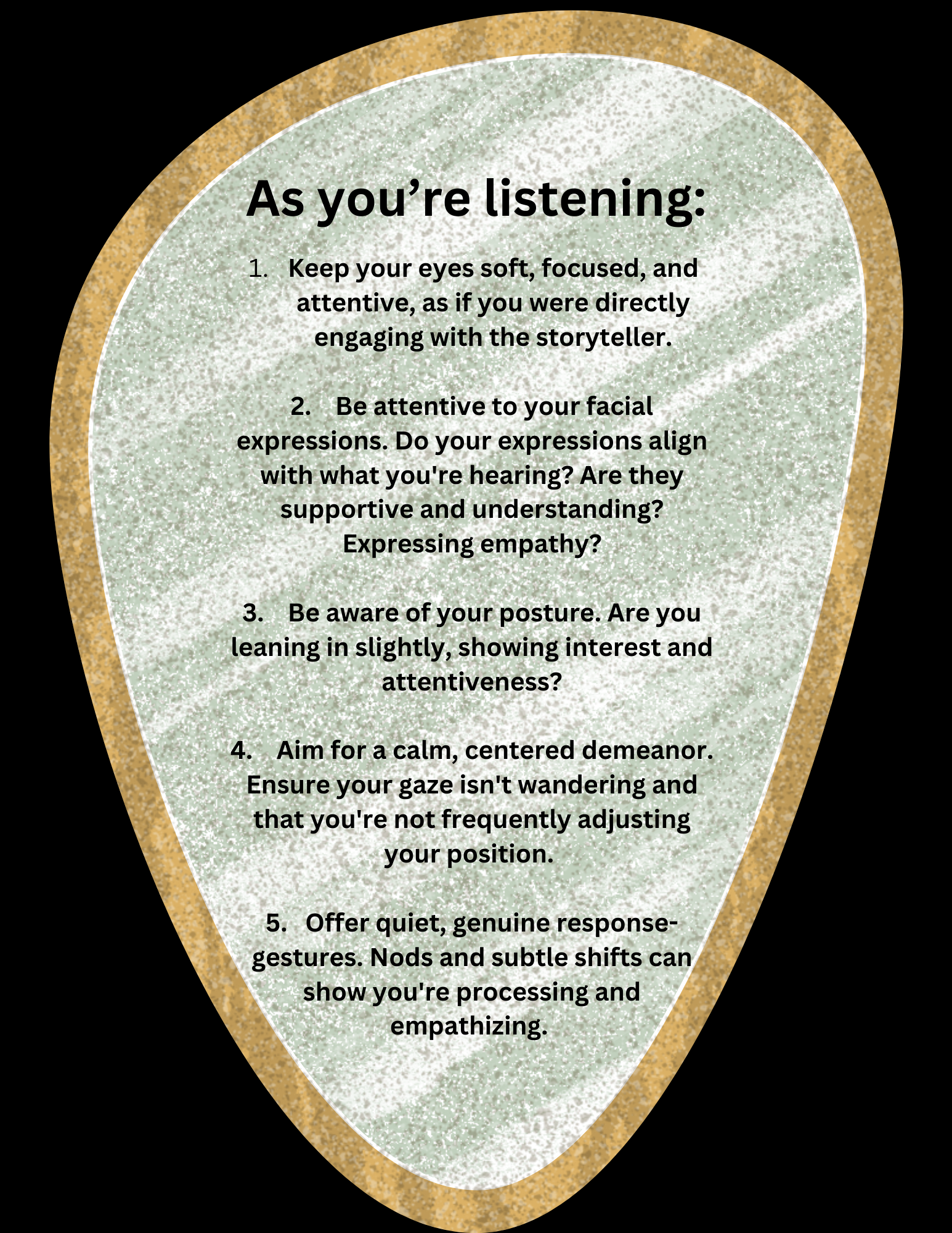
As you are listening [Accessible Text]:
- Keep your eyes soft, focused, and attentive, as if you were directly engaging with the storyteller.
- Be attentive to your facial expressions. Do your expressions align with what you’re hearing? Are they supportive and understanding? Expressing empathy?
- Be aware of your posture. Are you leaning in slightly, showing interest and attentiveness?
- Aim for a calm, centered demeanor. Ensure your gaze isn’t wandering and that you’re not frequently adjusting your position.
- Offer quiet, genuine response-gestures. Nods and subtle shifts can show you’re processing and empathizing.
 THE UNCENTER